 New Windsor ParkNorth Las Vegas
Contact
New Windsor ParkNorth Las Vegas
Contact
New Windsor ParkNorth Las Vegas
Contact
New Windsor ParkNorth Las Vegas
Contact
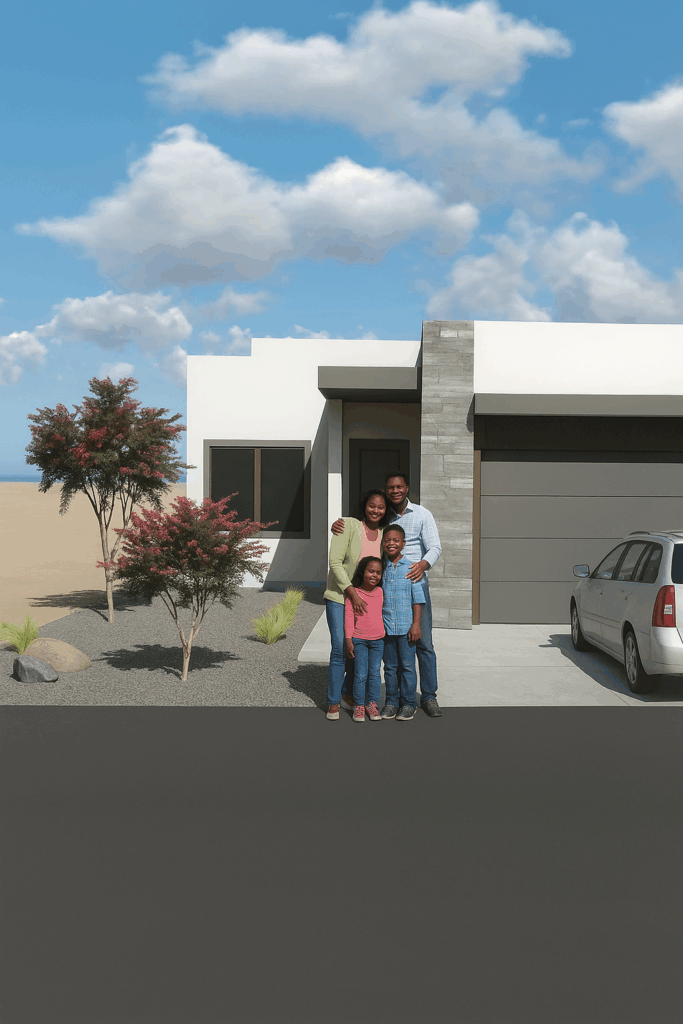
Ninety-three new houses on eighteen acres at Carey and West — built for the families who lost the ground beneath the original Windsor Park. Publicly funded. Given to the residents, not sold to them.
We are here to build the houses the State of Nevada and the City of North Las Vegas have committed to building. To do it with the architectural quality, environmental care, and ordinary respect the wait has demanded. And to hand over the keys.
What that looks like on the ground: ninety-three single-story houses across eighteen acres at Carey Avenue and West Street. A walkable grid. Native plants. The parks and corner shops the original community already knew, still inside a short walk of the new front doors.
The story didn't start in 2023. It started in 1964, when Windsor Park was one of the only places Black families in Las Vegas could buy a house. The ground was already on borrowed time.
Windsor Park goes up in North Las Vegas — one of the only neighborhoods Black families can buy into under the era's redlined market. People build lives here.
Decades of groundwater pumping compact the earth beneath the neighborhood. Houses begin to crack. Foundations fail. The cause is the city. The damage falls on the families.
Public agencies finally acknowledge structural failure across the neighborhood. A partial buyout starts. Most residents stay — they have nowhere comparable to go.
Homeowners and local advocates spend a decade and a half pressing state and city officials for a real answer. Not another patch. A new neighborhood.
CNN features the sinking neighborhood. Within months, the legislature commits to fund a replacement. The New Windsor Park takes shape on paper.
Ground breaks September 2025. Move-in begins December 2026 — sixty-two years after the first Windsor Park family bought their first house.
CDPCN was selected to plan, finance, and deliver the redevelopment. Founded in 1997 and led by Frank Hawkins, the nonprofit has built more than 1,700 affordable homes and apartments across the Las Vegas Valley over nearly three decades — the track record behind the decision to hand it this one.
Small, accountable, easy to find. The three people responsible for getting this from groundbreaking to keys.
Schedule, budget, and every contractor on the site. If the trades aren't talking to each other, that's her phone.
Drew the three plans. Drew the streetscape that holds them together. Still on site every other week to keep both honest.
Single point of contact for every displaced family — from the first selection meeting through the day they take their keys.
My mother bought our first house here in 1971. I watched the kitchen floor tilt for the last twenty years of it. Standing on the new slab — same address, basically — I cried.
They asked us what we needed. Not what was efficient to build. What we needed. That's not the meeting we expected.
My grandkids are going to grow up on this street thinking nothing of it. That's the whole point. That's the part nobody ever talks about.
I'd given up by 2015. I really had. Watching the framing go up last month — I'm not used to good news taking this long and still showing up.
A hundred tasks per house. Six phases. Ninety-three houses. Mapped from the first feasibility memo to the last walkthrough.